
XM Global VPS Is Not a Commodity. It’s an Execution Boundary.
A lot of traders talk about VPS like it’s a plain utility: rent a server, install MT4 or MT5, keep the EA running, and move on. That’s the surface-level version.
The actual reason people pay for an XM Global VPS is more specific. They’re trying to move control closer to the moment an order becomes a fill. Put simply, they’re not just hosting trades. They’re deciding how much of the execution path still belongs to them.
That sounds dramatic until you’ve been on the wrong end of it: the setup was right, the entry was right, and the market still slipped away because the connection froze, the ping jumped, or the order had to wander through half the internet before reaching the broker.
That’s where execution control stops being a phrase and starts being the whole point.

I’ve seen traders spend hours on indicators, signals, and position sizing while ignoring the one thing that can quietly damage all three: distance to the broker server. If your machine is sitting on a random home network with unstable routing, you’re basically asking the market to be kind to your latency. It won’t be.
That’s why a trading VPS only matters when it’s treated as infrastructure, not decoration.
What You’re Actually Buying with VPS for XM Global
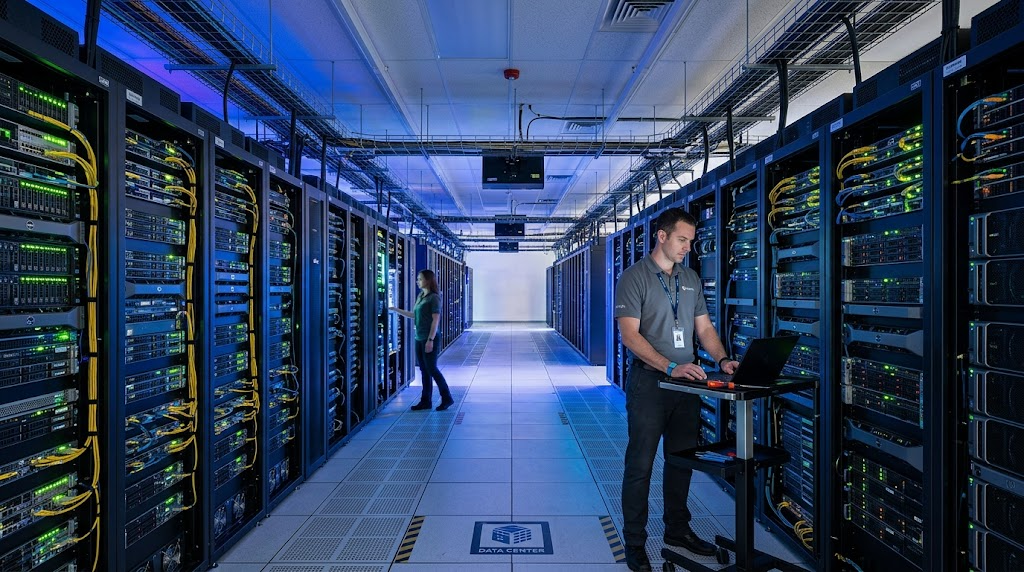
If you’re using VPS for XM Global, the value is not “faster internet” in the casual sense. The value is location, route stability, and fewer moving parts between your platform and the broker’s server.
Here’s the practical version:
- Your EA or terminal stays online even if your laptop dies.
- Your connection path becomes more predictable.
- Your latency variance drops, which matters as much as raw latency.
- Your order is less exposed to local Wi-Fi problems, ISP jitter, or a power issue at home.
That last point gets missed all the time. Traders like to quote a low ping number, but what usually hurts performance is inconsistency. A 12 ms connection that stays around 12 ms is often more useful than one that swings between 8 ms and 80 ms. That swing can turn a clean entry into a sloppy fill.
If you want a broader frame on this, I’d read [XM VPS in 2026: The Infrastructure Shift That Will Decide Who Keeps the Fill Advantage] as the companion piece. It’s the same argument, just zoomed out: infrastructure is part of edge now, not something separate from it.
A Simple Way to Judge Whether Your VPS Is Helping or Just Looking Fancy
Here’s the part most traders skip. They buy a VPS, install the platform, then assume the job is finished. It isn’t. You need to know whether the server is actually improving execution control.
Use this quick test:
-
Check server distance
- Find out where the broker server is located.
- Pick the VPS region closest to that server, not closest to you.
-
Measure live-session latency
- Test latency at different times of day.
- Don’t just test once at 3 a.m. when the internet is quiet.
-
Watch reconnect behavior
- Briefly kill the local network and see whether the platform stays stable.
- If your VPS reconnects slowly or drops sessions, that’s a problem.
-
Compare fill quality
- Place small live orders or use a demo environment with the same setup.
- Compare requested price vs actual fill price across several trades.
-
Track variance, not just average
- A VPS that looks fine on paper but behaves erratically during the London or New York open is not doing its job.
This is where traders either get more precise or get fooled by specs.
Spec-Heavy VPS vs Execution-Focused VPS
A lot of providers sell hardware as if the answer is more CPU, more RAM, more buzzwords. For trading, that’s often the wrong lens. You’re not rendering video. You’re trying to reduce friction in the execution path.
| Category | Spec-Heavy VPS | Execution-Focused VPS |
|---|---|---|
| Main selling point | CPU / RAM / storage | broker proximity / routing stability |
| Best for | general hosting | low latency server use cases |
| Ping consistency | decent, often irrelevant | usually the priority |
| Fill quality impact | indirect | direct |
| Reconnect reliability | varies | designed to be resilient |
| Price/value for trading | often mediocre | usually better if the route is clean |
That table is the argument in one glance. Traders do not need the fanciest box. They need the box that keeps the route short, stable, and boring.
The Two Failure Modes That Quietly Drain Accounts
The first failure mode is obvious: the VPS is too far from the broker server. You can feel that one in the fills. Orders arrive later than expected, especially when volatility rises.
The second failure mode is more subtle: the VPS is technically close, but the route is messy. That means latency may look acceptable in a single test, while execution still feels off once the session becomes active.
I’ve seen this happen during fast markets: a trader gets the “good enough” ping on paper, then loses several trades in a row to inconsistent fills. Nothing dramatic happened. No server crash. No outage. Just small friction, repeated enough times to matter.
That’s why execution control is a better lens than “speed.” Speed without stability is just a nicer way to lose.
What a Good Trading VPS Feels Like in Real Use
A good trading VPS does not feel exciting. That’s the point.
It should behave like this:
- The platform starts fast and stays up.
- The connection doesn’t wobble during session opens.
- Pending orders trigger with less delay.
- EAs keep running without babysitting.
- Reconnects, if they happen at all, are quick and clean.
If you want a simple benchmark, compare your current setup with the VPS across one week:
- average latency
- latency spikes
- number of disconnects
- order submission delay
- slippage on identical trade sizes
Even a plain notebook of those numbers will tell you more than a polished marketing page ever will.
Common Mistakes That Kill the Advantage
A lot of traders undercut themselves after choosing a decent server.
-
Choosing the wrong region
- Closest to you is not the same as closest to the broker.
-
Running too much junk on the VPS
- If the machine is bloated with random tools, you’ve reduced the reliability you paid for.
-
Ignoring live-hour testing
- A low-latency server can still underperform when traffic is heavy.
-
Treating VPS as a one-time setup
- The market changes, routes change, broker infrastructure changes. Re-check it.
-
Assuming the brand name alone solves execution
- XM Global VPS is only useful if the actual route, stability, and behavior match the promise.
That last one matters. A known provider can still be the wrong fit for your execution style.
The Real Reason Traders Keep Coming Back to This Topic
There’s a reason this keeps bothering serious traders. It’s not only about convenience. It’s because they hate feeling powerless when a good trade turns into a mediocre one for reasons they can’t see.
That’s the emotional core here: execution control is the difference between “my strategy failed” and “my infrastructure took away the edge.”
And once you’ve felt that loss a few times, you stop thinking of XM Global VPS as hosting. You start treating it like a boundary device between your intent and the market’s final decision.
If you’re still comparing providers, or deciding whether a VPS for XM Global is worth it at all, use the same lens every time: does this setup reduce uncertainty at the fill stage, or is it just making the dashboard look cleaner?
That question cuts through the noise fast.
My practical take
If you trade manually once in a while, a VPS is nice to have.
If you run EAs, scalp, trade news, or care about fill consistency more than marketing claims, then a properly chosen trading VPS becomes part of your edge.
Not because it makes you smarter.
Because it gives you back a little of the control the market tries to take away.