
The real bill for a “cheap” VPS usually shows up later
People often buy a VPS the same way they buy a cable adapter: with a shrug, a tight budget, and the assumption that “good enough” will stay good enough. That holds until the site starts attracting real visitors, the dashboard fills with warnings, and the machine that was supposed to save money starts demanding attention every day.
That’s the part pricing pages never mention. The hidden infrastructure cost is not only the monthly bill. It’s the time spent waiting, the traffic lost when pages stall, the credibility damaged when the site feels unreliable, and the mental drag of always wondering whether the server is about to fail again.
If you’ve ever looked at an underpowered VPS and thought, “It’s fine, it hasn’t broken yet,” you’re already paying the most expensive invoice: uncertainty.
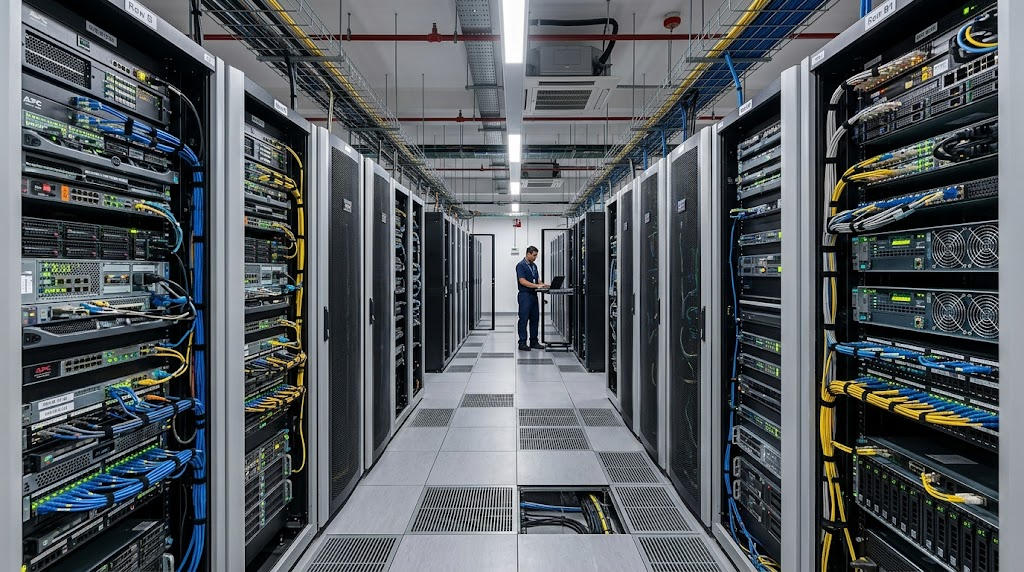
What a weak VPS really costs you
“Cheap VPS” sounds responsible. Practical. Sensible, even. In reality, an underpowered VPS often acts like a slow leak in a tire: not dramatic enough to stop the trip right away, just persistent enough to wear down the whole journey.
Here’s what usually gets drained:
- Time: Every slowdown turns into a support task, a config tweak, a cache experiment, a restart.
- Traffic: Users leave when TTFB is poor, checkout is sluggish, or a page freezes on mobile.
- Credibility: A site that feels unstable makes the business feel smaller than it is.
- Focus: You stop building and start babysitting.
- Opportunity: Launches, campaigns, and content pushes get delayed because the stack can’t be trusted.
If that sounds familiar, this earlier piece hits the same nerve from a different angle: Your VPS Isn’t Slow — Your Cheap Plan Is Quietly Punishing You. The point is the same. The plan looks cheap. The consequences don’t.
Many teams miss the damage because it arrives in pieces: one slow deploy, one failed backup, one customer asking why the site “takes forever.” None of those moments feels like a crisis. Together, they become the operating environment.
The underpowered VPS pattern: “It works” until it doesn’t
Most underpowered VPS setups fail in a very specific way. They don’t collapse all at once. They wear down.
You see it in:
- CPU spikes during traffic bursts
- Memory pressure when more than a few services run at once
- Disk I/O bottlenecks during backups, imports, or log-heavy workloads
- Network lag when the server is already busy
- Random latency that makes performance feel “mysteriously inconsistent”
That inconsistency is hard on people. We can handle a system being fast or slow. We do not handle a system that changes behavior every few minutes.
This is where server performance becomes a business issue, not a technical one. A page that loads in 0.9 seconds feels trustworthy. A page that sometimes loads in 1.2 seconds and sometimes in 8.5 feels broken, even if the uptime report says 99.9%.
That’s why the cheapest plan often creates the most expensive hidden infrastructure cost. You don’t just pay for the server. You pay for the instability tax.
A practical way to tell if your VPS is too small
If you’re not sure whether you’ve outgrown your box, use this simple 5-step check before you upgrade VPS in a panic.
-
Watch load under real traffic, not idle conditions.
A VPS that looks healthy at 3 a.m. can fall apart at noon. -
Check memory headroom.
If RAM regularly sits near the ceiling, Linux will start making “helpful” decisions you won’t enjoy. -
Look at disk latency during backups and updates.
Slow storage turns ordinary maintenance into user-facing pain. -
Measure response time, not just uptime.
Uptime can look beautiful while the user experience is terrible. -
Compare your admin time before and after each incident.
If you’re spending more energy on server triage than product work, the VPS is already costing too much.
A useful rule: if you’re constantly compensating for the machine with caching, trimming, disabling, postponing, and hoping for the best, you don’t have a reliable system. You have a fragile one with a cheap label.
Cheap vs. adequate: the numbers don’t lie
A small plan can work for a hobby site. It gets messy when that same plan has to support growth, content spikes, or actual customers.
| Factor | Cheap / underpowered VPS | Better-sized VPS |
|---|---|---|
| Monthly price | Lower | Higher |
| Time spent tuning | Frequent | Occasional |
| Traffic handling | Spiky, unreliable | More consistent |
| Risk of slowdowns | High | Lower |
| Team confidence | Fragile | Stable |
| Hidden infrastructure cost | Often high | Usually lower over time |
| Growth readiness | Poor | Much better |
That last line is easy to miss. A cheap box is not saving money if it forces you to delay campaigns, compress content, or avoid launching features because you don’t trust the server to handle them.
Real savings come from reducing friction. Not from buying the smallest possible machine and then spending your week trying to make it act larger.
If your site is starting to matter, the upgrade VPS decision is less about indulgence and more about removing a bottleneck that is already shaping your results.
Where a bigger VPS actually pays off
A larger plan does more than add CPU and RAM. It gives you breathing room.
That breathing room changes how you work:
- Deploys become less stressful.
- Backups stop feeling like a gamble.
- Traffic spikes don’t trigger immediate panic.
- Your stack can absorb a plugin, a queue worker, a database cache, or an analytics tool without buckling.
- You spend less time managing the machine and more time growing the business.
That’s where something like VPS XXL makes sense as a category, not as a slogan. The point isn’t luxury. The point is margin. More headroom means fewer emergency decisions, fewer small failures, and fewer weekends spent wondering why everything slowed down again.
If you want a deeper look at the operational side of browser-heavy workflows too, this related article connects nicely with the same theme: Your VPS Browser Isn’t Just Slow — It’s Quietly Stealing Your Time, Privacy, and Control. Different symptom, same problem: too little infrastructure for the job you’re asking it to do.
When you should upgrade VPS without waiting for a disaster
People usually wait too long. They wait until launch day breaks. They wait until a customer complains. They wait until a campaign drives traffic and the server folds like a lawn chair.
Upgrade earlier if any of these are true:
- Your CPU is pegged during normal business hours
- RAM usage stays uncomfortably high for long stretches
- Disk I/O becomes the bottleneck during backups or imports
- You’re running multiple services on one small VPS
- Your site’s revenue or lead flow depends on uptime and speed
- You feel nervous every time traffic rises
That last one matters more than it sounds. If your server makes you hesitate, your infrastructure is already affecting your decision-making. That’s not an engineering detail. That’s a leadership problem.
A solid VPS should fade into the background. You shouldn’t have to think about it every day. If you do, it’s no longer cheap. It’s expensive in a way the invoice does not show.
The uncomfortable truth
A low-cost VPS can be the right choice for experiments, drafts, and toy projects. Not every site needs a heavy setup.
But if your business is real, your audience is real, and your time is limited, an underpowered VPS is often a trap dressed up as prudence.
The real choice is not “pay more now” versus “save money now.”
It’s “pay a little more for room to grow” versus “pay later in slow pages, lost users, extra labor, and damaged confidence.”
That’s why an upgrade VPS move is often strategic, not cosmetic. It protects your attention. It preserves trust. It keeps growth from getting kneecapped by a machine that was never meant to carry the load.
And that’s the part worth remembering the next time a pricing page makes tiny resources look clever. Cheap isn’t cheap when it keeps charging you in silence.